As awareness of ergonomic health and hybrid working modes expands worldwide, electric sit-stand desks have evolved from niche office furniture into a mainstream workspace essential. The global adjustable desk market has maintained steady growth, with clear disparities in market share across regions, product types, usage scenarios and brand tiers. This breakdown explains the full market landscape based on latest industry research data, helping distributors, retailers and office furniture buyers grasp core demand patterns.
1. Regional Market Share Breakdown
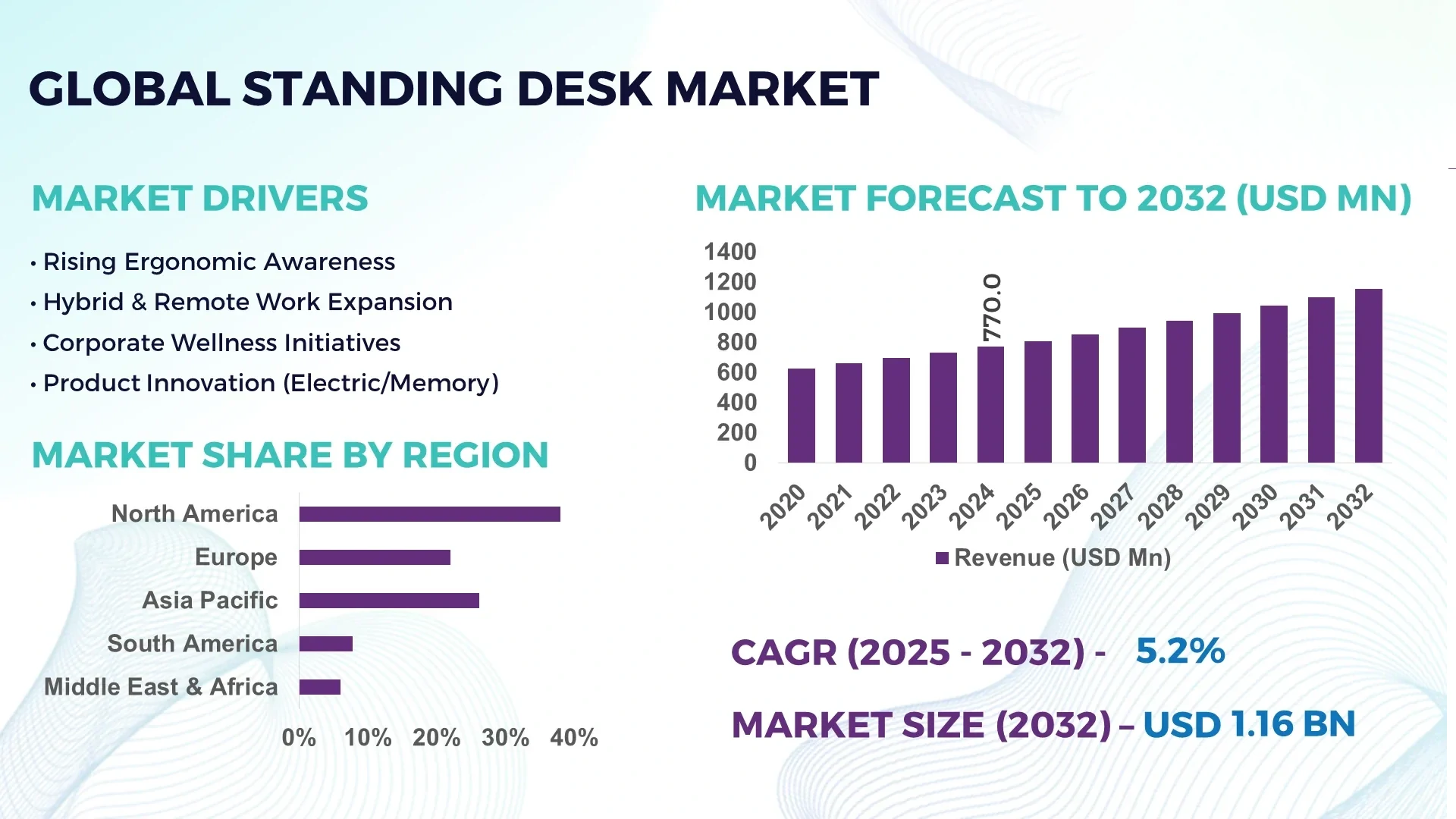
North America remains the largest consumption market for electric standing desks, capturing roughly 37% of global market share. The United States dominates regional demand, fueled by mature corporate wellness policies, widespread remote work culture and high consumer willingness to pay for ergonomic gear. Over 60% of local enterprises have equipped their offices with adjustable desks, while more than half of remote workers own electric height-adjustable desks for home offices. Premium dual-motor models, smart memory desks and complete workstation bundles are top sellers here.
Europe ranks second with approximately 29% global market share. Strict EU workplace safety regulations push enterprises to standardize sit-stand workstations, especially in Germany, the UK and France, which together generate nearly 70% of European regional sales. European buyers value eco-friendly materials, low-noise operation and stable lifting performance; dual-motor desks with anti-collision safety features are highly favored by commercial clients.
The Asia-Pacific region holds around 22% of global share and stands as the fastest-growing market with a projected CAGR above 6% through 2035. China acts as the world’s primary production base while domestic consumption surges rapidly. Tech startups, co-working spaces and young remote workers drive local demand. This region is price-sensitive, creating strong demand for cost-effective single-motor desks alongside mid-range dual-motor frames. Latin America, the Middle East and Africa currently account for the remaining small portion of global share, with growth accelerating as multinational offices expand locally.
2. Market Share by Product Drive System
Within electric adjustable desks, dual-motor frames have overtaken single-motor versions in global market penetration, holding about 54% of the electric desk segment share. Dual-motor desks deliver balanced lifting, higher load capacity and minimal wobble at maximum height, making them the primary choice for corporate offices, multi-monitor workstations and premium home setups. Their share keeps rising as motor manufacturing costs drop and buyers prioritize long-term stability.
Single-motor electric desks occupy the remaining 46% of the electric desk market. Linked by a central transmission shaft, they feature simpler structures and lower price tags, perfectly matching budget home users, student desks and small-scale home offices. While cost-efficient, their market share is slowly declining as consumers upgrade to smoother, more reliable dual-motor alternatives.
Compared with manual crank desks, electric adjustable desks claim over 58% of the entire adjustable desk market, firmly dominating mainstream consumption thanks to effortless one-touch height control and smart programmable memory functions.
3. Market Share by Application Scenarios
Commercial office use still generates the majority of global demand, accounting for roughly 61% of electric desk sales volume. Large enterprises, tech parks, shared co-working spaces and educational institutions place bulk wholesale orders, prioritizing certified, heavy-load, long-durable desk frames suitable for high-frequency daily use. Bulk procurement from corporate clients stabilizes large-volume brand market share.
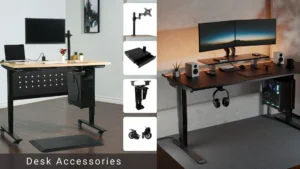
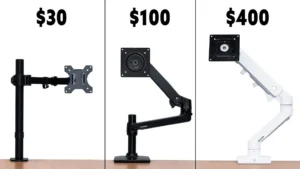
Household home office demand takes up 39% of total market share and grows at a faster year-on-year rate. The rise of permanent hybrid and remote work pushes individual consumers to build dedicated ergonomic workspaces at home. Home buyers favor compact sizes, minimalist appearances and complete sets paired with monitor arms, cable trays and anti-fatigue mats, driving bundled accessory sales alongside desk frames.
4. Competitive Landscape & Brand Market Share
The global standing desk industry is moderately fragmented with no single enterprise holding absolute monopoly power. Top international brands including Uplift Desk, Vari, Herman Miller and Steelcase collectively secure around 30% of the global market share, with Uplift Desk alone taking roughly 10% as the single largest brand player. These premium brands target high-end commercial clients with proprietary technology, full global certifications and long-term warranty services.
The remaining 70% market share is split among thousands of mid-tier manufacturers, cross-border OEM factories and regional local brands. Asian manufacturers, especially Chinese suppliers, occupy a dominant position in the mass supply segment, supplying cost-competitive desk frames and complete desks to global distributors, Amazon sellers and offline furniture retailers via flexible OEM & ODM customization.
5. Future Share Shift Trends
Industry forecasts indicate Asia-Pacific will continue expanding its market share in the coming decade, supported by rising disposable income and growing ergonomic awareness among young consumers. Meanwhile, dual-motor electric desks will keep eroding single-motor market share, while smart connected desks with APP control, sitting reminders and integrated USB charging will capture an increasing percentage of premium product sales.
For global sourcing partners, understanding this layered market share distribution helps align product positioning: high-stability dual-motor sets target North American and European commercial wholesale clients, while affordable single-motor desk frames suit price-sensitive home and emerging regional markets. Paired with matching ergonomic accessories, electric standing desk suppliers can capture greater segments across all global consumer groups.